
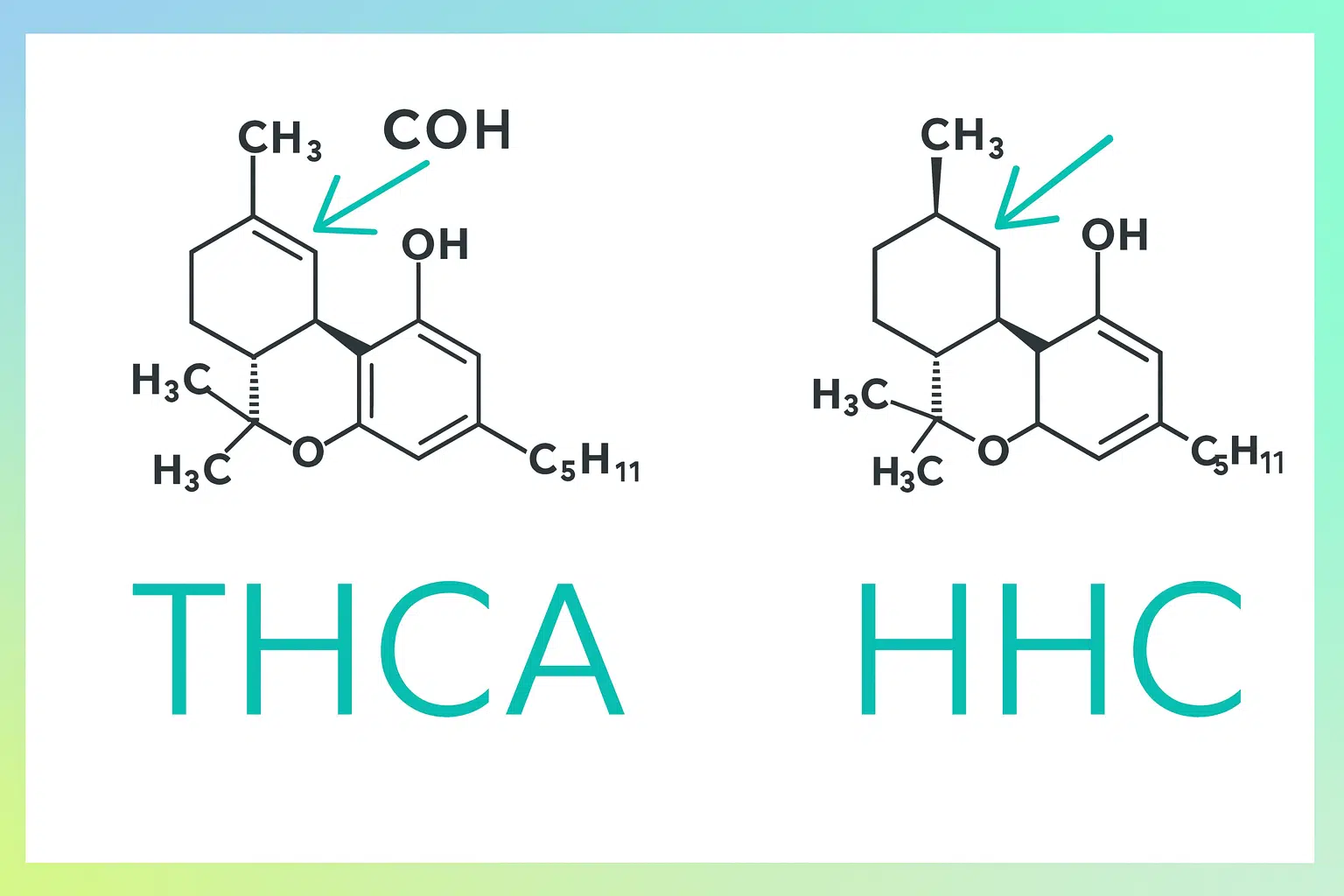
The cannabis market is not only about THC and CBD, but there is a wide range of cannabinoids such as HHC and THCA. We single out these two minor cannabinoids because their potency, psychoactivity, and benefits are unique.
Here, we explore the THCA vs. HHC topic in detail, delving into the science, effects, benefits, and practical applications of these cannabinoids.
What Is THCA?

THCA (tetrahydrocannabinolic acid) is the non-psychoactive acidic precursor to THC. It naturally occurs in cannabis plants and is slowly converted to THC due to exposure to heat. Unlike THC, this cannabinoid doesn’t produce any intoxicating effects while offering all the therapeutic benefits. When consumed without heating, THCA doesn’t cause a “high,” providing an option to benefit from the therapeutic effects without intoxication.
What Is HHC?
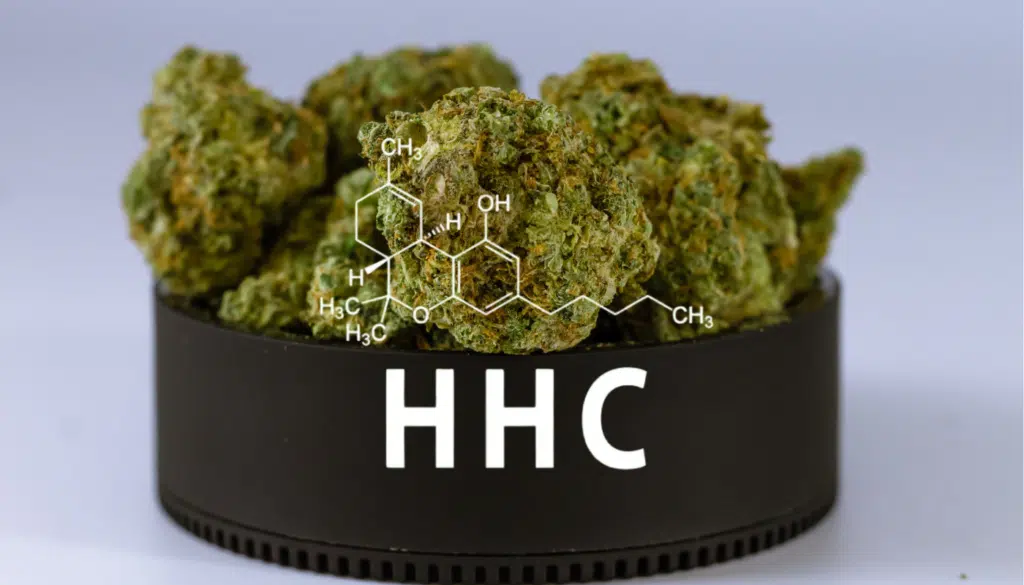
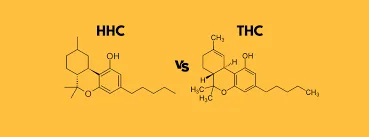
HHC (hexahydrocannabinol) is a semi-synthetic cannabinoid created through hydrogenation of THC. When hydrogen molecules are added to THC’s structure through chemical reaction, HHC molecules form. In nature, HHC occurs in trace amounts in cannabis plants, but it is commercially produced through laboratory hydrogenation for market availability. HHC is more chemically stable than THC, offering more extended shelf life and resistance to heat, UV light, and oxidation degradation.
THCA vs HHC: Key Differences
| Feature | THCA | HHC |
| Potency | Non-psychoactive until heated; converts to highly potent THC | Moderate psychoactivity; ~70-80% of Delta-9 THC’s strength |
| Psychoactivity | None in raw form; full THC effects when decarboxylated | Mildly psychoactive; produces gentle euphoria and relaxation |
| Stability | Degrades to THC over time with heat/light exposure | Highly stable; resistant to oxidation and degradation |
| Nature | Naturally occurring acidic cannabinoid in raw cannabis | Semi-synthetic; produced through THC hydrogenation |
| Effects Profile | Raw: anti-inflammatory, neuroprotective; Heated: full THC effects | Balanced euphoria, pain relief, relaxation without intensity |
| Onset & Duration | Fast when smoked/vaped; 1-2 hours for edibles (as THC) | Similar to THC; 15 mins vaped, 1-2 hours edibles |
| Entourage Effect | Strong when consumed with other cannabinoids/terpenes | Limited research on synergistic effects with other compounds |
| Drug-Test Risk | Converts to THC; will trigger positive tests | May trigger positive results; cross-reactivity with THC tests |
| Legal Clarity | Gray area; federally illegal when converted to THC | Unclear; potentially legal under Farm Bill loophole |
Effects Comparison: What You Can Expect
Before making a THC A vs. HHC choice, it’s essential to understand how these cannabinoids affect you.
THCA (When Heated → THC)
Decarboxylation of THCA converts it to Delta-9 THC. It occurs with heat application, such as vaping, smoking, or baking. THC conversion results in:
- Signature cannabis “high” which causes pronounced euphoria and mood elevation
- Powerful pain relief is effective for chronic pain conditions
- Strong psychoactive effects, including increased appetite and relaxation
- Sedation at higher doses is effective for insomnia
HHC
HHC doesn’t convert to some other cannabinoid on heat application; instead, it produces:
- Mild to moderate euphoria, often described as a smoother high compared to THC
- Offers physical ease and mental calm without heavy sedation
- Pain and inflammation reduction effectiveness between CBD and THC
- Safer cannabinoid benefits, such as clear-headed effects without paranoia
Potential Benefits of THCA and HHC
Knowing the benefits not only helps THCA vs HHC selection but also facilitates goal matching with product selection.
Benefits of THCA:
- Anti-inflammatory properties when consumed raw, beneficial for conditions like arthritis, lupus, and inflammatory bowel disease
- Neuroprotective effects are effective for neurodegenerative diseases, including Parkinson’s and Alzheimer’s
- Anti-nausea benefits help cancer patients and those with digestive disorders
- When heated, it unleashes full THC potency, providing powerful pain relief, appetite stimulation, and therapeutic effects when activated
Benefits of HHC:
- Longer shelf stability maintains potency over time without degradation
- Moderate psychoactivity offering therapeutic benefits without intense intoxication
- Offers legal advantage in regulatory gray areas where THC remains prohibited
- Balanced effects for pain relief, mood enhancement, and relaxation without side effects often associated with THC
Side Effects & Safety
The next segment in our HHC vs THCA comparison is the side effects and safety concerns.
THCA
- In raw form, THCA has minimal or no side effects. Concerns arise when heated, and conversion to THC happens
- As THC has common side effects such as anxiety, paranoia, increased heart rate, dry mouth, etc.
- Potential dependency and tolerance development if smoked, baked, or vaped
- Drug testing concerns as THCA converts to THC
HHC
- Mild psychoactive side effects, including dizziness and drowsiness
- Potential anxiety or paranoia at higher doses
- Not much long-term safety data is available
- Unknown contaminants or byproducts from manufacturing processes
Safety Tips
- Whether you choose THCA or HHC, start with low doses
- Purchase cannabinoid products only from reputable vendors that provide third-party Certificates of Analysis (COAs)
- Avoid driving or operating machinery when smoking or vaping THCA
Which Is Better for What?
Ultimately, the choice between THCA and HHC comes down to your goals and preferences.
1. For Potency
Is THCA stronger than HHC?
As a precursor to THC, THCA is stronger than HHC, as it has the potential to convert to THC on heat application. When converted, this cannabinoid delivers significantly more potent psychoactive effects than HHC.
If you are after potency, THCA offers significant results.
2. For Stress or Mood Support
HHC is better for stress management and mood support as it provides balanced, clear-headed effects. You can expect relaxation without heavy sedation or potential anxiety. Also, HHC’s gentler profile works better for daytime anxiety relief.
3. For Sleep
THCA (converted to THC) proves superior for sleep support, particularly at higher doses. As it can produce sedation, it helps users fall asleep faster. If you are making an HHC vs THCA decision for insomnia, THCA is better.
4. For Beginners
HHC is ideal for beginners due to its moderate, manageable effects with a lower risk of overwhelming psychoactivity or anxiety. Cannabis novices benefit from its predictable, smooth experience, unlike THCA, which, when converted, can surprise or overwhelm unprepared beginners.
How THCA & HHC Compare to Other Cannabinoids
| Cannabinoid | Psychoactivity | Primary Benefits | Best For |
| THCA (raw) | None | Anti-inflammatory, neuroprotective, anti-nausea | Wellness without intoxication |
| THCA (heated/THC) | High | Pain relief, appetite, sleep, euphoria | Strong therapeutic/recreational effects |
| HHC | Moderate | Balanced relaxation, pain relief, mood support | Functional daytime use, moderate effects |
| CBD | None | Anxiety, inflammation, seizures, general wellness | Non-intoxicating therapeutic use |
| Delta-8 THC | Mild-Moderate | Gentle euphoria, appetite, nausea | Lighter psychoactive experience |
| CBG | None | Focus, inflammation, gut health, antibacterial | Alertness without intoxication |
How to Choose the Right Product
When deciding between THCA and HHC, start by honestly assessing your tolerance, experience level, and desired outcomes.
- Decide whether you want high potency (THCA/THC) or something smoother (HHC).
- Beginners should start with gummies or low-dose vapes.
- Always look for COAs that confirm potency, purity, and the absence of contaminants.
Conclusion
THCA and HHC, both cannabinoids, offer distinct benefits and serve different purposes, catering to various user preferences. While THCA offers versatility, it can be consumed raw for non-intoxicating wellness benefits or smoked/vaped for full THC potency. HHC offers consistent moderate psychoactivity with enhanced stability and functional cannabinoid experiences.
We hope you now have a better understanding of the differences between THCA and HHC in terms of potency, effects, and benefits, allowing you to make informed cannabinoid selections.